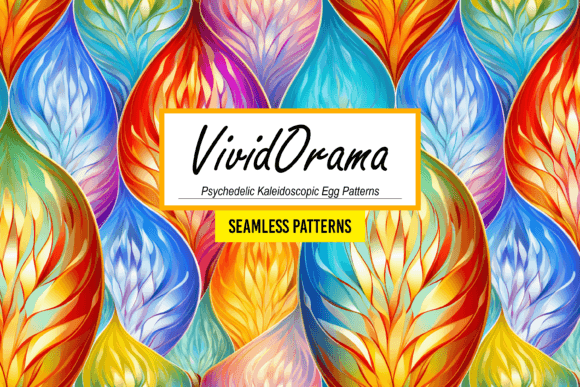
Psychedelic Kaleidoscopic Egg Patterns: A Design Evaluation
The digital design landscape is filled with repetitive geometric motifs, yet there remains a specific niche for patterns that blend organic shapes with complex symmetry. Psychedelic Kaleidoscopic Egg Patterns represents a collection of seamless textures designed to offer a unique visual experience through the use of rainbow spectra and intricate symmetry. This article evaluates this specific pattern set, analyzing its composition, technical specifications, and suitability for various creative projects.
Understanding the Design Concept
At its core, this pattern set utilizes the egg shape as a foundational element, distorted and repeated to create a kaleidoscopic effect. The term "psychedelic" in this context refers to the vivid color palette and the optical movement created by the repetition. Unlike standard floral or abstract backgrounds, these designs rely on radial symmetry to generate a sense of depth and motion. The result is a texture that can appear both fluid and structured simultaneously.
The collection typically consists of 12 distinct variations. Each variation maintains the core aesthetic of the egg motif but alters the color distribution and the intensity of the psychedelic elements. This variety allows designers to select a specific mood without deviating from the overarching theme. The seamless nature of the files ensures that the pattern can be tiled indefinitely without visible breaks, creating an "endless harmony" that is crucial for background applications.
Technical Specifications and Usability
When evaluating any digital asset, technical compatibility is a primary concern. These patterns are provided in high-resolution formats, specifically sized at 1024 x 1024 pixels. While this resolution is sufficient for many web and print applications, it is important to understand how resizing affects quality. The files are vector-like in their seamless nature, meaning they can be scaled up or down without pixelation, provided the software handles the tiling correctly.
A significant advantage of this set is its integration with popular design tools. The patterns are optimized for platforms like Canva, allowing users to apply them directly to projects without extensive post-processing. This ease of use reduces the barrier to entry for non-technical designers who need professional-looking textures quickly. The files are delivered as instant digital downloads, eliminating shipping delays and ensuring immediate access to the assets.
- Format: High-quality raster files suitable for scaling.
- Dimensions: 1024 x 1024 base resolution.
- Licensing: Commercial use is permitted, which is essential for product creators.
- Delivery: Instant download without watermarks.
Applications and Creative Potential
The versatility of Psychedelic Kaleidoscopic Egg Patterns makes them applicable across a wide range of mediums. Their primary strength lies in surface design, where the seamless nature allows for consistent coverage. Fabric printing is a natural fit; the repeating egg motifs work well on textiles for apparel, home decor, and accessories. When printed on paper, these patterns serve effectively for stationery, scrapbooking, and packaging.
In the digital realm, these patterns function as dynamic backgrounds. They are particularly effective for website headers, blog post dividers, or social media graphics where a bold visual statement is required. The ability to customize colors via software means that even if the original spectrum does not match a brand's identity perfectly, the underlying structure can often be adapted to fit a more subdued color scheme.
Specific products that benefit from this pattern include custom t-shirts, mugs, phone cases, and tote bags. The trippy nature of the design appeals to markets interested in retro aesthetics, festival culture, or modern art prints. For digital scrapbookers, these patterns provide a unique alternative to traditional paper textures, adding a layer of complexity to personal layouts.
Considerations and Tradeoffs
While the visual impact of these patterns is high, there are tradeoffs to consider regarding their application. The intensity of the psychedelic color spectrum may clash with minimalist design principles. If a project requires a subtle background that does not distract from the primary content (such as text-heavy documents), these patterns might be too dominant. In such cases, reducing the opacity or applying a filter to mute the colors is necessary, though this alters the original intent of the design.
Another consideration is color accuracy. Digital screens and physical printers render colors differently. The vibrant rainbow hues displayed on a monitor may appear slightly different when printed on fabric or paper. Users should expect some variance and may need to perform test prints before committing to large-scale production runs. Additionally, while the base size is 1024 x 1024, extremely large format printing (such as billboards) may require upscaling beyond the native resolution, potentially introducing artifacts depending on the interpolation method used.
Decision-Making: Is This Pattern Set Right for You?
Selecting the right asset depends heavily on the specific goals of the project. This pattern set is a strong fit for creators looking to add energy and visual interest to their work without constructing a design from scratch. It is ideal for entrepreneurs selling print-on-demand products, artists seeking inspiration for mixed-media pieces, and marketers needing engaging visuals for campaigns targeting younger demographics.
However, alternatives may be worth considering if the project demands a different aesthetic. If the goal is to evoke calmness or professionalism, neutral geometric patterns or solid colors would be more appropriate. Furthermore, if the project requires absolute precision in color matching (such as corporate branding guidelines), custom illustration might be a better route than using pre-made pattern sets, as pre-made assets offer less control over specific hue values.
For those who value efficiency and commercial licensing, this set offers a practical solution. The inclusion of commercial use rights removes legal barriers for sellers, and the seamless nature eliminates the need for manual editing to remove tile lines. The availability of 12 unique variations provides enough choice to avoid repetition across multiple projects within a single portfolio.
Conclusion
Psychedelic Kaleidoscopic Egg Patterns occupies a unique space in the market for digital design assets. By combining the organic form of the egg with the mathematical precision of kaleidoscopic symmetry, it offers a visually striking texture that is both functional and artistic. While the bold color palette requires careful consideration regarding context and medium, the benefits of ease of use, commercial licensing, and versatility make it a valuable resource for a wide array of creative endeavors.
Ultimately, the decision to incorporate these patterns relies on the desired emotional response from the audience. If the objective is to capture attention, convey creativity, or tap into a retro-futuristic vibe, this collection aligns well with those objectives. For projects requiring subtlety or strict adherence to conservative color palettes, it may serve better as a source of inspiration rather than a direct application. Regardless of the final choice, understanding the technical capabilities and aesthetic limitations of the pattern ensures a successful integration into any design workflow.